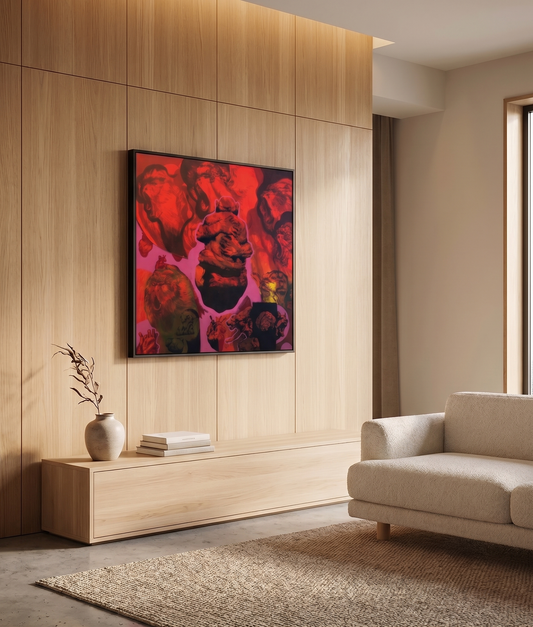
Monkey Grove
For many years I moved within the world of Christian symbolism. One of the concepts I often reflected upon was sin. Today, I wonder whether, in an increasingly secular world, this notion has become an anachronism, or whether it can still describe something important about human experience.
From that period, one medieval metaphor has stayed with me. It was believed that evil creates nothing of its own, but merely apes the good. It preserves its form while altering its direction. It is not creative. It repeats a gesture without understanding its meaning.
Today, having stepped outside the world of institutional Christianity, I see this figure differently. I no longer view it as a story about the struggle between good and evil. What interests me more are those moments when a person begins to lose touch with themselves. When they lose their inner coherence, and their life gradually slips into chaos and inner agitation.
In this sense, the Seven Deadly Sins have ceased, for me, to be a catalogue of transgressions. They have become a map of different forms of dissatisfaction and of the ways in which one can mistake a desire for its imitation.
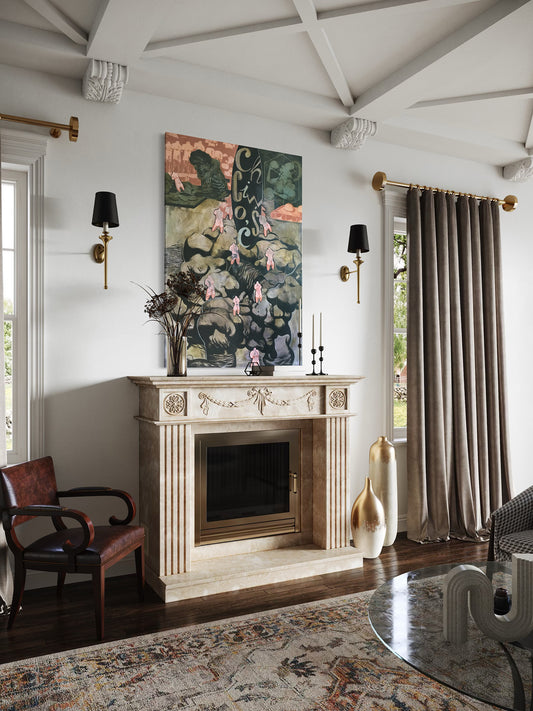
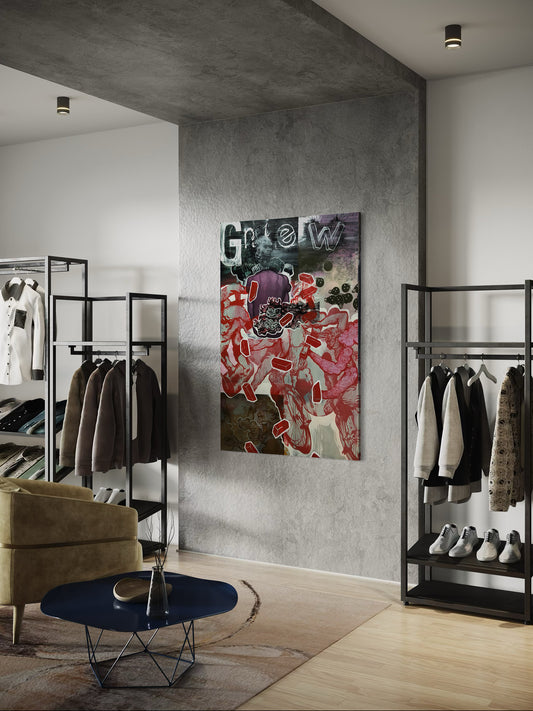
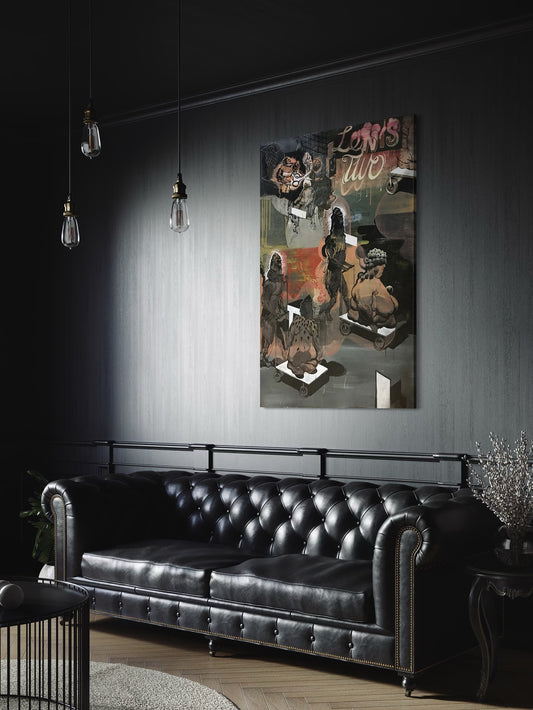
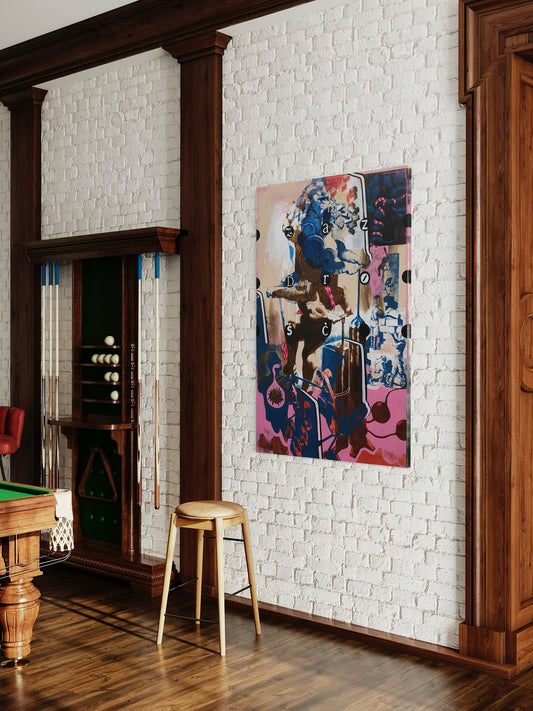
Monkey Grove is an attempt to capture such moments. Each painting explores a different form of aping, a different way in which we move away from our own center, trying to replace it with a substitute.
-

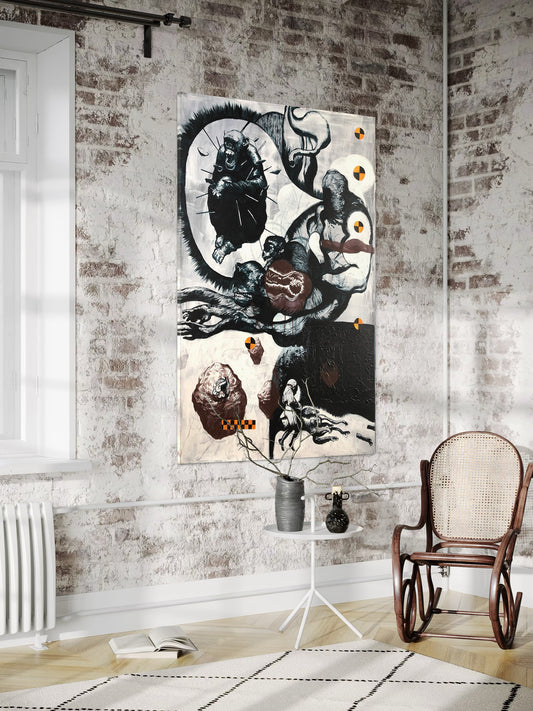 Sold outSold out
 -

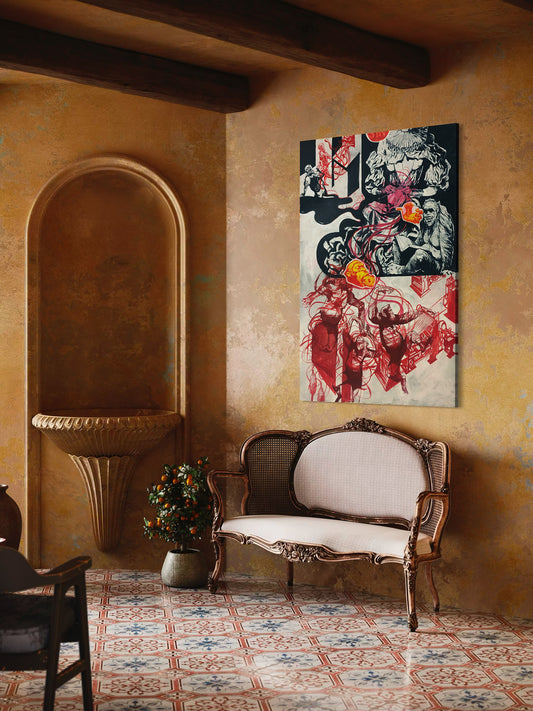 Sold outSold out
 -

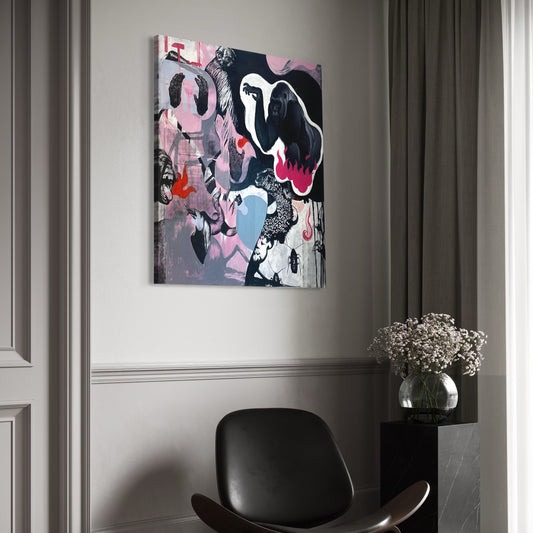
"Already the Door Begins to Creak, Already the Shuffling from the Dark Corridor Draws Near…"
100 x 100cm
Regular price $0.00 USDRegular price